
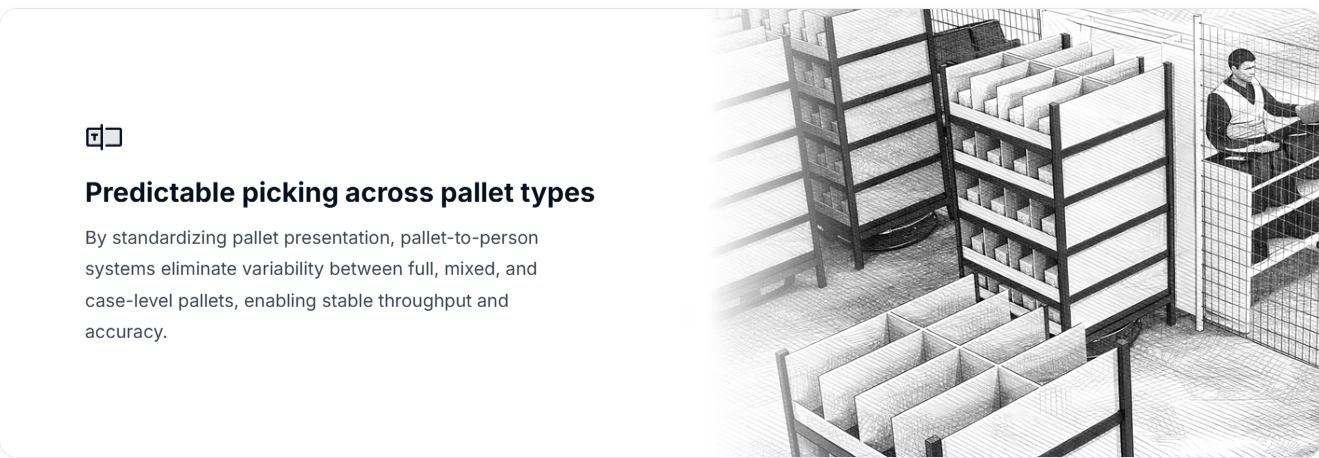
Handling full pallets, mixed pallets, and case picks slows pallet picking and increases errors as assortment and load complexity grow.
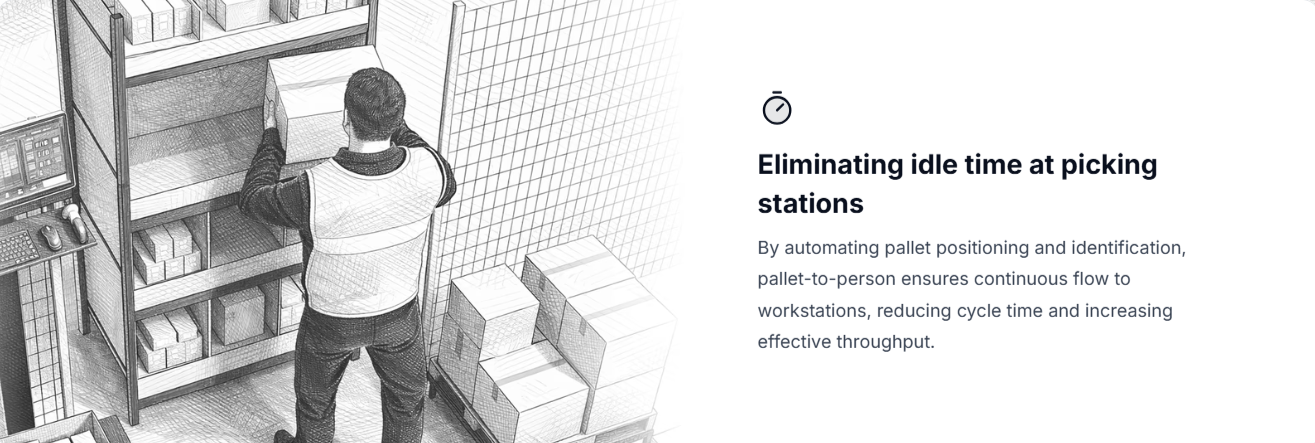
Manual scanning and pallet alignment delay workstation presentation, increasing cycle times and limiting continuous pallet picking throughput.
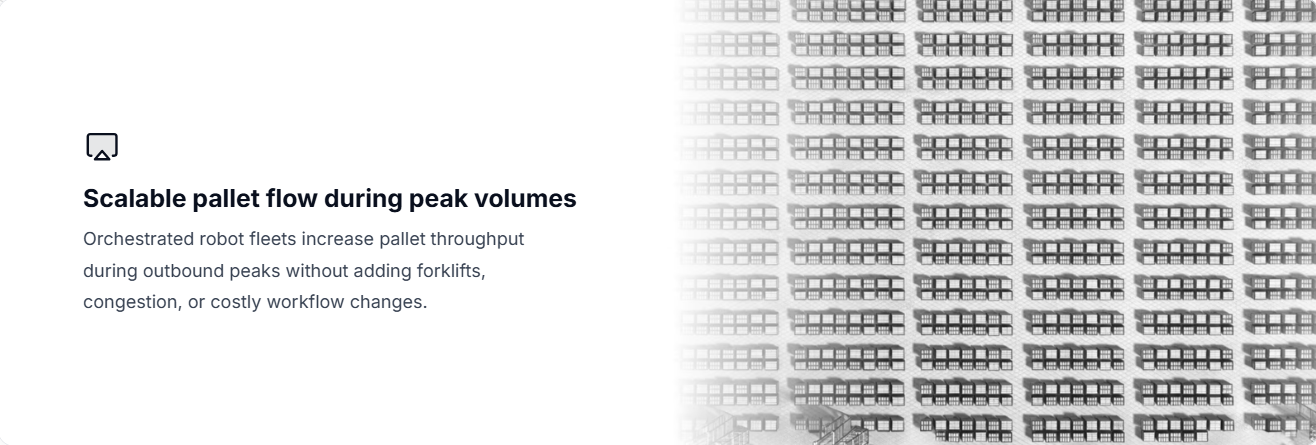
During peak volumes, manual pallet movement creates forklift congestion, queues, and staging bottlenecks, leading to SLA risks.
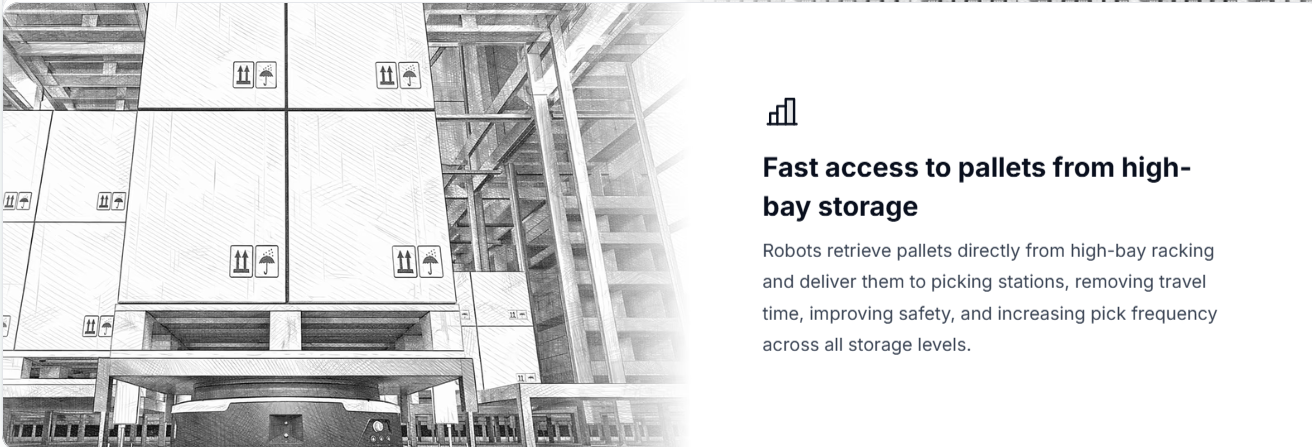
High-bay racking is designed for storage, not fast picking. Manual retrieval from upper levels increases travel time, reduces pick frequency, and adds safety constraints.
Traditional pallet workflows rely on fixed processes. Changing routes, priorities, or capacity often requires manual coordination, slowing response to demand.
Safety-driven limits on pallet flow and buffering reduce effective throughput at picking stations, creating idle time even during high-demand periods.
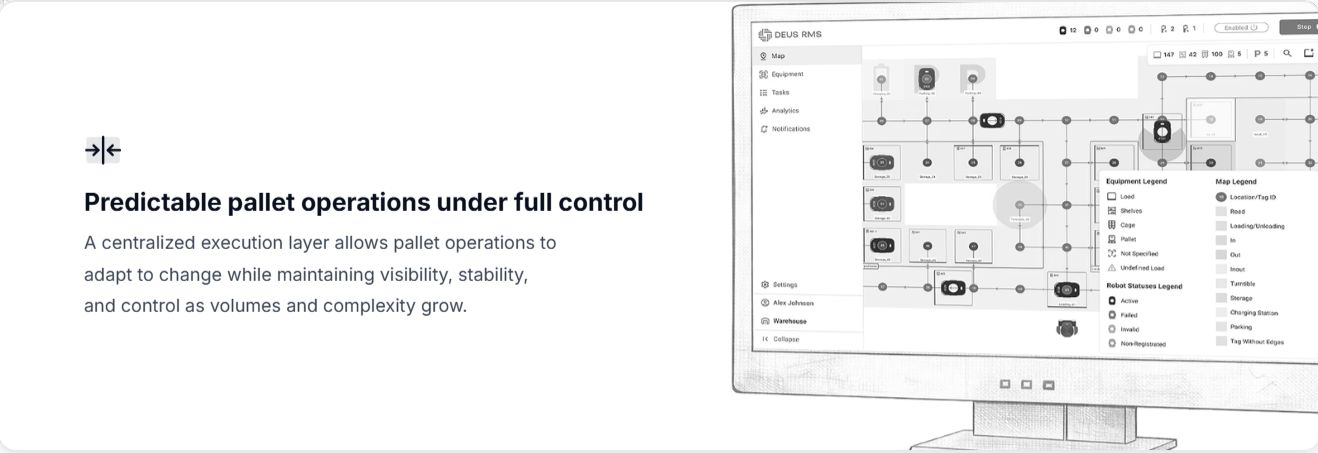
Pallet-to-Person approach, adapted to different industries, order profiles, and operational constraints.
Built for multi-client operations with unpredictable peaks, fast turnaround times, and frequent SKU changes across accounts. Typical focus: scalability, client isolation, peak resilience.

Handles click-and-collect, D2C, and store replenishment from a shared inventory pool without compromising picking speed or accuracy. Typical focus: orchestration, order prioritization, flexibility

Supports bulk replenishment, tight SLAs, and channel-specific order profiles across wholesale and franchise networks. Typical focus: throughput, reliability, SLA compliance

Fast, zone-based picking across ambient and chilled areas for time-sensitive orders and stable daily volumes. Typical focus: speed, freshness, operational safety

Optimized for high-SKU, low-unit picking with seasonality, returns, and frequent assortment changes. Typical focus: flexibility, accuracy, returns handling

Built for regulated environments requiring high accuracy, traceability, and controlled batch handling. Typical focus: accuracy, traceability, compliance, controlled handling.
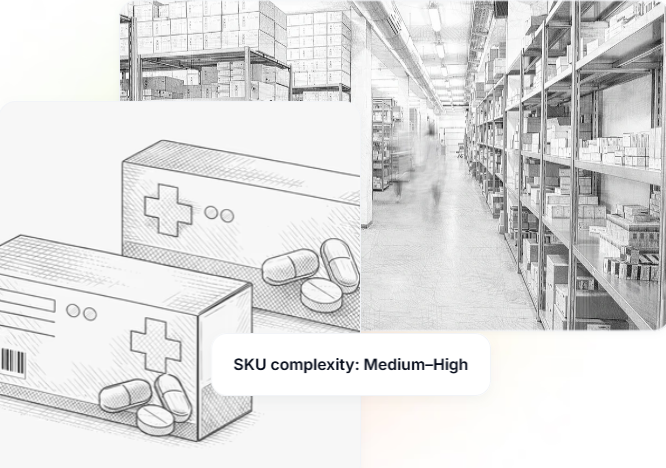
Designed for operations where walking distance, SKU growth, or space limits reduce picking efficiency. Typical focus: productivity, space utilization, labor efficiency.

Up to 400%: Higher storage density
4–5 times:Higher picking efficiency. More orders processed with the same workforce
Up to 300: Pallet or tote presentations per hour at a single MIX workstation
200–300%: Overall efficiency gain. Significant productivity uplift versus manual picking
Increased picks per operator: Higher picks per hour with less physical strain, allowing teams to focus on value-added tasks instead of walking and handling.
Higher space utilization: Dense storage layouts and reduced aisle requirements enable higher throughput without warehouse expansion.
Predictable peak performance: Stable output during seasonal peaks and demand spikes, protecting SLAs and outbound schedules.
Low operational risk: Reduced reliance on manual coordination and forklifts lowers congestion, safety risks, and scaling friction as volumes grow.